

How Anders Vegang Won the eChampions Cup in FC 26
Winning at the highest level in competitive FC 26 is rarely about flashy skill moves or random moments of brilliance. It’s about structure, FC 26 Coins, and the ability to repeatedly create situations where the opponent is forced into uncomfortable decisions. That’s exactly what Anders Vegang demonstrated on his path to lifting the eChampions Cup, finally completing the missing piece of his competitive career.
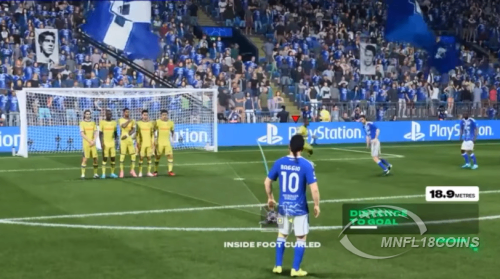
In the final against Hezers, Anders didn’t just win—he controlled the game through three clearly identifiable tactical pillars. His approach is a perfect example of how modern FC 26 esports is played at the top level: centered attacking structures, intelligent off-ball movement, and suffocating defensive pressure.
Let’s break down the three key principles that defined his championship-winning performance and why they are so effective in FC 26.
1. Central Control: Building Attacks Through the Middle
The most defining feature of Anders’ gameplay is his commitment to central attacking play. While many players instinctively drift wide to exploit space on the wings, Anders consistently does the opposite—he funnels play through the center and uses it as a control hub.
At first glance, this might seem risky. After all, the center of the pitch is often crowded and heavily defended. But Anders turns this pressure into a strength.
Why is the center more powerful than the wings
On the wing, your options are naturally limited. You usually get:
One dribble opportunity
One forward pass option
And then you’re forced to reset or cross
But in the center, everything changes.
From central positions, Anders maintains access to:
Left-side progression
Right-side progression
Direct forward passes
Recycling options backward or sideways
Quick switches of play
This means the attack never dies. It simply evolves.
Instead of committing to one isolated duel on the wing, Anders constantly re-centers the ball, resets the structure, and then attacks again from a new angle. This keeps the opponent in a constant state of defensive adjustment.
The key principle: “center first, then expand”
A crucial detail in his gameplay is that even when he plays the ball wide, it is never permanent. The wide pass is only a stepping stone.
He immediately looks to bring the ball back into central areas. This forces defenders to shift side-to-side repeatedly, opening gaps in their structure over time.
The moment defenders get pulled out of shape is the moment Anders strikes.
Forcing defensive imbalance
One of the most powerful outcomes of central play is how it manipulates defensive behavior. When Anders recycles the ball centrally, defenders are forced to step forward or shift inward.
That movement creates:
Overloads in midfield
Misaligned defensive lines
Open passing lanes into wide spaces
Even when the opponent tries to stay compact, Anders’ constant central circulation stretches their attention in multiple directions.
This is how he creates his most dangerous chances—not through speed, but through positional manipulation.
2. Triggering Runs: Creating Chaos with Multiple Attackers
If central play is the foundation of Anders’ strategy, then triggered runs are the engine that drives unpredictability.
One of the most important mechanics in FC 26 is the ability to manually trigger off-ball runs using L1/LB commands. Anders uses this feature not occasionally, but constantly—and with precise intention.
The concept: three attacking threats at once
At any given moment, Anders tries to create a situation where the opponent must defend:
A dribbling player on the ball
A runner on the upper lane
A runner on the lower lane
This creates a triangle of pressure. The defender is no longer reacting to one action—they are reacting to three simultaneous threats.
This is where defensive breakdowns begin.
How Anders builds these situations
The process is simple in theory but extremely difficult in execution:
He initiates a pass and immediately triggers a run with L1/LB
He selects another nearby player and triggers a second run
He maintains control of the ball carrier while observing movement
The result is controlled chaos.
Defenders are forced to choose:
Track the runner in behind?
Step toward the ball carrier?
Cover passing lanes?
No matter what they choose, something becomes exposed.
The psychological pressure on defenders
What makes this tactic so effective is not just mechanical—it’s psychological.
Defenders are constantly forced to make rapid decisions under pressure. When multiple runners are moving at once, hesitation becomes deadly.
Anders exploits this hesitation perfectly.
If a defender tracks one runner, he immediately exploits the space left behind. If the defender stays central, he releases the ball wide or drives forward himself.
It becomes a loop of punishment for every defensive choice.
Switching the point of attack
Another key detail is his willingness to reverse direction instantly.
If one side becomes overloaded with defenders, Anders doesn’t force it. Instead, he:
Stops the attack progression
Re-centers or switches play
Rebuilds the same structure on the opposite side
This is what makes his attack so difficult to contain. He never overcommits to one idea.
Instead, he forces the opponent to defend endlessly until they eventually break.
3. Relentless Defensive Pressure: Reading the Game Before It Happens
While Anders’ attacking structure is elite, his defensive ability is what truly completes his gameplay. At the highest level, defense is not about tackling—it’s about prediction.
Anders defends by thinking one step ahead of the opponent.
Reading passing lanes, not players
Instead of chasing the ball carrier, Anders focuses on:
Likely passing directions
Secondary support options
Structural weak points in the opponent’s buildup
This allows him to position players not where the ball is, but where it will be.
That distinction is what separates elite defense from average defending.
Constant player switching
One of the most impressive aspects of his defensive style is how frequently he switches control between players.
He is constantly:
Repositioning midfielders
Cutting passing lanes
Switching to defenders before the pass is even made
This proactive switching means he is always ahead of the play.
Rather than reacting, he is pre-loading defensive actions.
Second-man pressure as a tool, not a habit
Anders also uses second-man press (R1/RB) in a controlled way. He does not spam it blindly. Instead, he uses it to:
Delay passing options
Force directional errors
Create predictable passing lanes
Once the opponent is funneled into a predictable path, Anders switches to intercept or challenge directly.
Controlling space through anticipation
The most advanced part of his defensive system is spatial control. He doesn’t just defend individuals—he defends zones.
When the opponent shifts the ball side to side, Anders mirrors the movement with calculated positioning. Each switch is intentional, designed to:
Close passing triangles
Block central progression
Force wide circulation
Over time, this suffocates the opponent’s ability to build meaningful attacks.
Eventually, they either lose possession or attempt a risky pass that Anders is already prepared for.
The Complete System: Why It All Works Together
What makes Anders Vegang’s approach so powerful is not any single mechanic—it’s how everything connects.
His system forms a complete loop:
Central play gives him control and flexibility
Triggered runs create unpredictable attacking pressure
Defensive anticipation allows instant transition recovery
Each phase supports the next.
When he wins the ball, he already knows how he wants to attack.
When he attacks, he already prepares his defensive structure.
When he defends, he is already reading the next attacking opportunity.
This is what elite FC 26 gameplay looks like at the highest level: not reaction, but structure.
Final Thoughts
Anders Vegang’s eChampions Cup victory is not just a highlight moment—it is a blueprint for competitive FC 26 success.
His gameplay proves three essential truths:
The center of the pitch is the most powerful control zone in the game
Off-ball movement is just as important as dribbling or passing
Defense at the highest level is about prediction, not reaction
For players looking to improve, the lesson is clear: stop thinking in isolated plays and start thinking in systems. Control space, control movement, cheap FC 26 Coins, and control the tempo of the match.
Because at the end of the day, FC 26 isn’t just about scoring goals—it’s about controlling everything that happens before the goal even exists.
RECENT NEWS
-
FC 26 Guide: Best SBCs, Objectives, and Rewards
Jul-03-2026 PST | Categories: FC 26 -
FC 26 4-2-4 Formation Guide: Dominate Matches with Relentless Counterattacks
Jul-02-2026 PST | Categories: FC 26 -
PoE Phrecia Event Guide: Best TotA Farmer & League Starter Combo for Maximum Profit
Jun-27-2026 PST | Categories: Path of Exile
Maybe You NEED

RECENT NEWS
-
Dark and Darker Best Tank Barbarian Build-250HP Leviathan One Shot Setup
Jun-26-2026 PST | Categories: Dark And Darker -
NBA 2K26: The Ultimate Point Man Build Guide
Jun-22-2026 PST | Categories: NBA 2K26 -
An Epic on the Vines: The 3rd Age Druidic Cloak in OSRS
Jun-22-2026 PST | Categories: Runescape -
Aion 2 All Classes Explained Full Roles Skills and Best Playstyles Guide
Jun-18-2026 PST | Categories: Aion 2 -
Why You Keep Missing Blueprints in ARC Raiders
Jun-16-2026 PST | Categories: ARC Raiders